How to Get Your Brand Mentioned in ChatGPT
How to get your brand mentioned in ChatGPT, step by step: what ChatGPT cites, why earned media gets you named, and why paid placements barely…
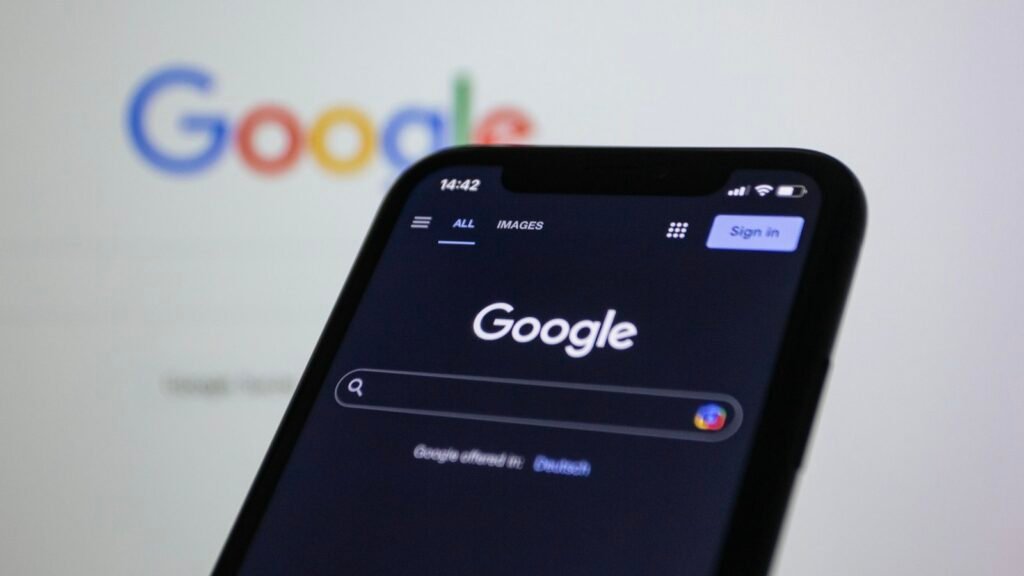
Type a question into Google today and you will often get an answer before you get a list of links. That answer is an AI Overview. It is a short, AI-written summary with a handful of source links attached. If you run a business, the question that matters is simple: how do Google AI Overviews choose their sources, and how does your company become one of them?
I have spent more than 25 years in PR, at top New York agencies and in-house at the NBA and NASCAR. For most of that time, a great story earned attention from readers. Now the same story also earns attention from Google’s AI. In this post, I will explain what Google itself says about how AI Overviews pick sources, what the independent data shows, and what a company that has never hired a PR agency can do about it.
Google began rolling AI Overviews out to everyone in the U.S. on May 14, 2024. By July 2025, CEO Sundar Pichai told investors the feature had more than 2 billion monthly users across more than 200 countries and territories, up from 1.5 billion a quarter earlier. In May 2025, Google said it was bringing a custom version of Gemini 2.5 to AI Overviews in the U.S.
Google’s guidance for site owners is unusually plain. Its Search Central documentation says there are “no additional requirements to appear in AI Overviews or AI Mode, nor other special optimizations necessary.” To be eligible as a source, a page must be indexed and eligible to show in Google Search with a snippet. That is it. Google adds that you do not need “new machine readable files, AI text files, or markup” to appear.
The same page explains the mechanism. AI Overviews use a technique Google calls “query fan-out.” Instead of running one search, the system issues multiple related searches across subtopics and data sources, then builds the answer. While the response is being written, Google’s models identify more supporting pages. The result is “a wider and more diverse set of helpful links” than a classic search shows. Google also notes that AI Overviews appear only when its systems decide the summary adds something beyond the normal results, and “as such, often don’t trigger.”
So the sources are not a copy of the top 10 blue links. They are the pages Google trusts to support each piece of the answer. That distinction is the whole game, and the data below shows how wide the gap is.
Three independent studies tell a consistent story about which pages AI Overviews cite.
Semrush analyzed 200,000 U.S. keywords that triggered an AI Overview in September 2024. The average AI Overview contained 11 links. But the overlap between those links and the top 10 organic results was only 20% to 26%. The top-ranked organic result appeared in just 46% of desktop AI Overviews and 34% of mobile ones. Most AI Overviews fired on informational searches, and more than three quarters appeared on keywords with fewer than 1,000 searches a month. Ranking first does not guarantee a citation, and ranking outside the top 10 does not rule one out.
Pew Research Center tracked the real browsing of 900 U.S. adults in March 2025. About 18% of all Google searches produced an AI summary, and 58% of users saw at least one that month. Wikipedia, YouTube, and Reddit together made up 15% of the sources cited. Government sites were cited three times as often in AI summaries as in standard results, 6% versus 2%. News websites made up 5% of cited sources.
Ahrefs tracks every domain cited in AI Overviews across more than 3 million U.S. queries and updates the list monthly. In the September 2026 snapshot, YouTube captured 22.9% of citations among the top 50 sites, Reddit 18.5%, and Facebook 10.1%. Further down the list sit the news outlets a buyer actually reads: Forbes, Yahoo, Business Insider, The New York Times, CNET, and CNBC. Every one of the 50 most-cited sites has an Ahrefs Domain Rating of 76 or higher.
Put those three together and the pattern is clear. AI Overviews pull from a wider set of pages than the classic top 10, but the pages they pull from are overwhelmingly big, trusted, heavily linked sites. A new company blog is not competing with the page ranked number 9. It is competing with Reddit, Wikipedia, and The New York Times.
Google does not publish a formula for AI Overview citations. But it does publish what it rewards, and the two documents line up.
In its guide to helpful, reliable, people-first content, Google describes the mix of signals it uses to judge experience, expertise, authoritativeness, and trustworthiness. Then it says: “Of these aspects, trust is most important.” Its explanation of how ranking works says one factor used to determine quality is “understanding if other prominent websites link or refer to the content. This is generally a good sign that the information is trustworthy.”
That is why the Ahrefs list looks the way it does. Sites with thousands of editorial backlinks from other trusted sites are the sites Google trusts, and the sites Google trusts are the sites its AI leans on when it writes an answer. Google’s May 2025 advice to publishers made the content side explicit too. It asked for “unique, non-commodity content” and noted that AI search users ask “longer and more specific questions.”
For a company that is not Reddit or Wikipedia, this points to two ways into an AI Overview:
The second path is a PR job. It is also the one most companies skip, because they are busy with the first.
Buyers often ask whether any of this produces traffic. Pew’s data is sobering. On search pages with an AI summary, users clicked a traditional result in 8% of visits, against 15% on pages without one. They clicked a link inside the summary itself in just 1% of visits. And 26% of users ended their browsing session after seeing a summary, compared with 16% without one.
Google frames it differently. Its documentation says that when people do click through from a page with an AI Overview, those clicks are “higher quality” and visitors spend more time on the site. Both things can be true. Fewer people click, and the ones who do are further along.
The practical lesson is that the mention is the asset. If AI Overviews answer “best online scam checker” or “most affordable senior living options” and your company is named in the answer, you have won something a click cannot measure. That is the same shift I described in How to Get Your Brand Mentioned in ChatGPT. Google’s search is heading the same way.
Google also keeps moving the goalposts toward trusted publishers. In May 2026 it brought Preferred Sources into AI Overviews and AI Mode, letting users pick outlets they want to see labeled inside AI answers, and added a “Highly Cited” badge for articles that many other stories reference. Google says people are twice as likely to click a Preferred Source. Both features put more weight on original reporting, the kind of story that quotes and links to companies like yours.
Here is the plan we at Prism run for clients. None of it is secret, and most of it is old-fashioned PR with a new payoff.
1. Fix the foundation first. Google’s eligibility rules are short: the page must be crawlable, indexed, and eligible for a snippet. Make sure robots.txt is not blocking Googlebot, that the important content is in text rather than images, and that the page loads well on a phone. Treat this as the X’s and O’s, not the strategy. We explain why in What Are SEO, AEO and GEO? and on our SEO, AEO and GEO page.
2. Publish something only you have. Google’s word is “non-commodity.” A newsworthy study built on original data is the most reliable version of that. For Social Catfish, an online safety company, we built an annual State of Online Scams study from FBI, FTC, and platform data, ranked all 50 states, and pitched a local version to reporters in every state. The campaign earned 3,862 editorial backlinks and coverage in CNBC, USA Today, Reuters, and Business Insider. Those are the exact kinds of pages the Ahrefs and Pew data show AI Overviews citing. Our data-driven content page shows what goes into a study.
3. Earn coverage in the outlets AI Overviews already cite. The Ahrefs top 50 includes The New York Times, Business Insider, CNBC, and Yahoo. Pew found news sites make up 5% of AI Overview sources, and government sites 6%. Your job is to give those reporters a story they need, not an announcement you want to share. That is the core of our full-service PR work.
4. Make sure every story gives you a backlink. Google says links from prominent websites are a sign of trust. A mention without a link gives you the brand exposure, but the link is what raises the trust in your own pages so they can be cited directly. We cover how editorial links work in What Is Link Building?, and our pay-for-performance linkbuilding pilot bills only for do-follow editorial links from sites with a Domain Rating of 50 or higher. No links, no invoice.
5. Answer real questions on your own site. Semrush found most AI Overviews fire on informational, question-style searches with low volume. Write plain-English pages that answer the questions your customers actually ask, one question per section. This is the same discipline that wins featured snippets, which I covered in PR-first strategies for featured snippets and People Also Ask.
6. Keep it fresh. Google’s Preferred Sources program says any site “that publishes fresh content is eligible,” and Pew notes that the AI summary for a given search can change over time. One newsworthy study a year fades. Seniorly, a senior living company, published monthly studies on retirement and aging and earned 317 stories with editorial backlinks in 2025, at an average Domain Authority of 76.2, including 10 stories in Yahoo. That steady stream is what keeps a brand in the answer.
A few things I would not spend money on.
Buying placements or links. Google’s spam policies list “buying or selling links for ranking purposes,” including paying for posts that contain links, as link spam. Google says sites that violate the policy may rank lower or not appear at all. A paid article does not carry the trust signal that an editorial story does. Everything I have described above is earned.
Special AI files and markup. Google says directly that you do not need new machine-readable files, AI text files, or special schema to appear in AI Overviews. Anyone selling you a technical “GEO package” built on those things is selling you something Google says is unnecessary. We do not offer one. Our view is that AI visibility is an outcome of earned media and sound SEO fundamentals, not a separate product. I laid out the questions to ask any vendor in AI Search Visibility: Is Your Company in ChatGPT’s Answer?
Chasing the summary alone. Google’s own help page warns that AI Overviews “can and will make mistakes.” When they get your company wrong, the fix is the same as the strategy: more accurate, trusted coverage for the system to draw on.
Google says AI Overviews use a “query fan-out” technique, running several related searches and selecting pages that support each part of the answer. Any page that is indexed and eligible for a snippet can be chosen. In practice, studies from Semrush, Pew Research Center, and Ahrefs show the cited pages skew heavily toward large, trusted, well-linked sites such as YouTube, Reddit, Wikipedia, government sites, and major news outlets.
No. Google’s documentation states there are no additional requirements and no special files, AI text files, or markup needed. The fundamentals of SEO still apply, and Google’s advice is to focus on unique, non-commodity content.
Not reliably. Semrush found the top organic result appeared in only 46% of desktop AI Overviews and 34% of mobile ones, and the overlap between AI Overview links and the top 10 results was only 20% to 26%.
Less than traditional results. Pew Research Center found users clicked a link inside the AI summary in just 1% of visits and clicked a regular result in 8% of visits with a summary, versus 15% without one. Google says the clicks that do come through are higher quality.
Earned coverage in trusted outlets puts your company inside the pages AI Overviews already cite, and the editorial backlinks in those stories raise the trust in your own site so it can be cited directly. Newsworthy data studies are the most dependable way to earn that coverage.
Google has told us how AI Overviews choose their sources: pages it trusts, found through many searches at once, picked to support each line of the answer. The independent data shows what that trust looks like in practice, and it looks like big outlets and heavily linked sites. You do not need a new kind of marketing to get there. You need the oldest kind, done well: a story reporters need, placed in outlets Google already trusts, with a link back to you.
Across our clients, Prism has placed more than 25,000 stories and earned 20,000 backlinks. If you want to see how that would work for your company, schedule an intro meeting. Or start with our pay-for-performance pilot, where you only pay for the links we secure.
Keep Reading
How to get your brand mentioned in ChatGPT, step by step: what ChatGPT cites, why earned media gets you named, and why paid placements barely…
What is generative engine optimization? A plain-English guide to SEO, AEO and GEO, what Google says about each, and what AI tools like ChatGPT actually…
Measure your AI search visibility, learn why ChatGPT names some companies and not others, and see how earned media puts your brand in the answer…
Get Started
Tell us what you want to be known for. We will show you how earned media gets you there.